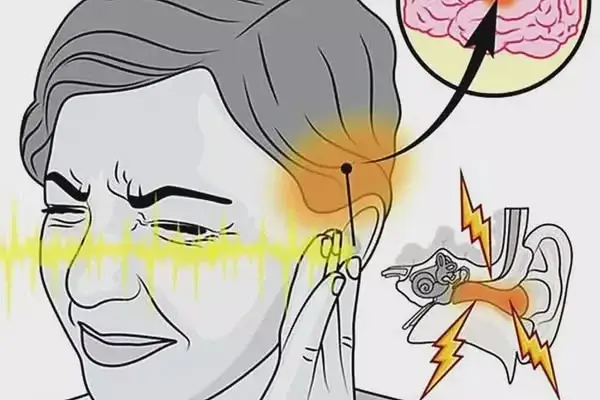
And while the emotions are hard enough, the physical signs speak even louder:
A relentless ringing, whistling, or buzzing that follows you from the moment you wake up to the moment you try to sleep — and never stops.
Sleepless nights lying awake at 3am, heart pounding, too exhausted to function but too overwhelmed to rest.
A sudden sensitivity to everyday sounds — a fork on a plate, a dog barking — that now feel like they're tearing through your skull.
A mental fog that drains you by midday, making it hard to think, remember, or focus on anything at all.
A quiet, growing fear that this is permanent — and that no one can actually help you.
If you're nodding your head reading this, you are not alone. According to the American Tinnitus Association, over 50 million Americans are living with exactly this — across every age group, every background, every walk of life — and most of them were told the same thing: "There's nothing we can do."
But that may not be the whole story.
Watch the short video below. What researchers are now discovering about the real cause of tinnitus is changing everything — and it starts with something most doctors never mention.
That ringing or buzzing in your ears isn't just "hearing damage." Researchers at Johns Hopkins now say tinnitus doesn't actually start in the ear. In most cases, it originates somewhere far deeper — inflamed nerve pathways and a disrupted communication loop between your inner ear and your brain.
You've probably been told to mask the sound, manage your stress, or try a hearing aid. But if the real problem is happening at the nerve level, none of those approaches come anywhere close to the root cause. They're putting a band-aid on a fire.
And when those nerve signals stay inflamed and misfiring, the ringing doesn't just stay the same. It gets worse. More intrusive, more disruptive to your sleep, and harder to tune out no matter what you try.
Every day without addressing the root cause is one more day that window for real action gets smaller. The method below explains why most treatments keep missing the mark — and what to do instead.
See what people just like you are saying after finding true relief and reclaiming their lives from the constant torment:
Brenda Miller, 64
Phoenix, Arizona
"For years I just wanted one hour of silence. The ringing never stopped, and I was terrified of what it was doing to my brain. Then I found this method, understood what was really causing it, and everything changed. I sleep through the night now. The fear is gone. I finally feel like myself again."
James R., 58
Orlando, Florida
"After years of doctors telling me to just 'learn to live with it,' I was done. Then I watched the video. Something finally made sense. I followed the protocol and within weeks the ringing quieted down enough for me to sleep through the night, sit on my porch, and have a real conversation with my wife again. That's everything to me."
Dorothy P., 71
Spokane, Washington
"Two years of doctors telling me nothing could be done. I was exhausted, foggy, and honestly starting to lose hope. A friend sent me the video and I almost didn't watch it. I'm glad I did. The ringing didn't disappear overnight, but it got quiet enough that I stopped dreading bedtime. At 71, that's everything."
Diane K., 59
West Virginia
"My ENT looked me in the eye and said 'learn to live with it.' I drove home in tears. A friend sent me the video and, honestly, I almost didn't watch. But something in the explanation finally made sense. It took a few weeks, but the ringing at 3am got quieter. Not gone — but quiet enough that I can sleep again. That's everything to me."
Yes, and that's exactly what most doctors won't tell you. The ringing you hear today isn't just a nuisance — it's your nervous system sending a distress signal. When the underlying inflammation is left untreated, the nerve pathways continue to deteriorate. What starts as occasional buzzing can become a constant, louder, more intrusive presence that affects your sleep, your memory, and your ability to think clearly. The longer it goes unaddressed, the smaller the window to reverse it.
Because most doctors are trained to treat the ear — and tinnitus doesn't actually start in the ear. It starts with inflamed nerve signals that the traditional medical system simply wasn't looking for. When doctors run hearing tests and everything comes back "normal," they have nothing left to offer. That's not dishonesty — it's a gap in what they were taught. The good news is that researchers are now looking in the right place, and what they're finding changes everything.
It can be. The same inflammation responsible for the ringing has been linked to cognitive decline, brain fog, and in advanced cases, early-onset memory loss. That doesn't mean every case progresses to that point — but it does mean you shouldn't ignore it. The ringing is your brain's way of telling you something is wrong beneath the surface. The earlier you address the real cause, the better the outcome.
Because everything you've tried before was probably aimed at the wrong target. Sound machines, hearing aids, supplements that mask the noise — none of them reach the source. The nerve inflammation that's triggering the ringing is still there, still active, still doing damage. This method works differently because it targets the actual biological root of the problem, not the symptom you hear. That's why people who felt hopeless after years of failed treatments are finally finding relief.
Absolutely — and if you're reading this, you probably already know it firsthand. The brain can't fully rest when it's processing a constant internal signal. That's why the nights are the hardest. The mental exhaustion of filtering noise all day depletes your cognitive resources, leaving you foggy, slow, and emotionally drained. The anxiety feeds the ringing, and the ringing feeds the anxiety. It's a cycle — and it needs to be broken at the source.
Yes. And for many people, better sleep is one of the first things they notice when the nerve inflammation starts to calm down. When the brain stops being overwhelmed by phantom signals, it can finally relax at night. You don't need another white noise machine or another sleep aid. You need the noise itself to get quieter. That's what addressing the root cause does — it doesn't just help you cope with the ringing, it starts to reduce it.
In some cases of acute tinnitus — after a concert or a sudden loud noise — yes, it can fade on its own. But if you've been living with this for months or years, the answer is almost certainly no. Chronic tinnitus is driven by a cycle of nerve inflammation that doesn't resolve by itself. Waiting rarely makes it better. In most people who wait, it gets worse. The window to act effectively is real, and it matters.
Don't accept it. Don't let anyone tell you to "learn to live with it." An increase in volume is your body escalating its warning signal — the inflammation is progressing and your nervous system needs support now. The worst thing you can do is nothing. Watch the presentation below. It explains exactly what's happening inside your nervous system, why the standard treatments keep failing, and what people are doing differently to finally find real, lasting relief.
Reclaim Your Life from Tinnitus
You've worked hard your whole life, waiting for your rest. But now, when the house is quiet, your head won't stop ringing. It's maddening, terrifying, and it's stealing your future. You just want something to make that noise go down so you can sleep again, have peace, and get back to living without the constant fear of what's happening to your brain.
Don't accept tinnitus as a permanent, progressive part of your life. Don't let the fear of cognitive deterioration, Alzheimer's, or Parkinson's paralyze you. The solution you've been waiting for, which attacks the real, hidden cause of your suffering, is within your reach.
Imagine waking up tomorrow in complete silence. Hearing the birds, laughing with your family without the constant distraction, having the mental clarity and energy you deserve, knowing your brain is safe. This life is not just possible; it's waiting for you.